The Science Museum, London

 This is definitely a must-see attraction for any Steampunk visiting London. The first exhibit you come to is called Energy Hall and features full-size steam engines and has interactive features that show you the physics of how they work and give the history of how they fit into the evolution of steam technology as a whole.
But, the absolute best exhibit hall is Making the Modern world. It offers a veritable cornucopia of amazing inventions, including Charles Babbage’s Difference Engine No. 1 and a working model of a Victorian-era workshop run on a belt system.


Like the Museum of London, I would definitely recommend this as a great place to take people with mixed interests because the museum also has exhibits on the history of agriculture, real objects used in the early days of space travel and a “4D” cinema that has films on a wide range of topics.
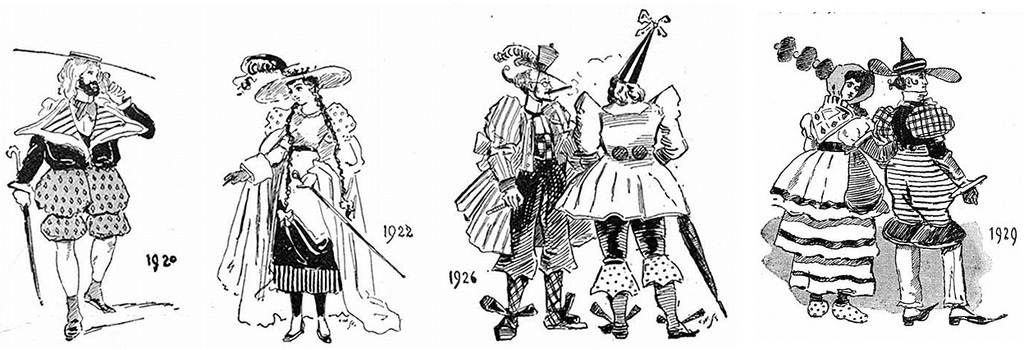
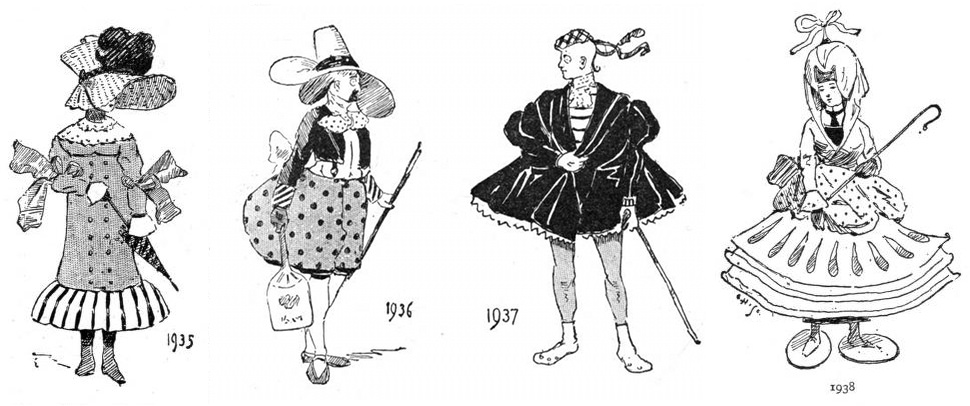
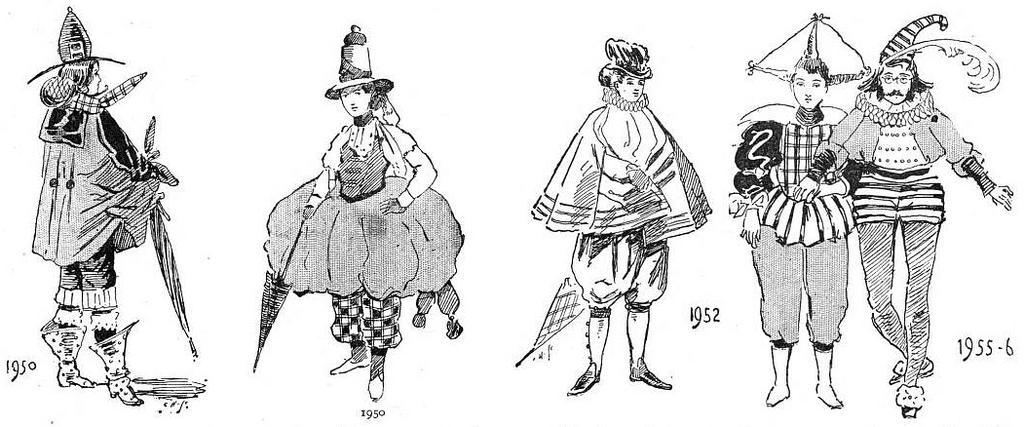
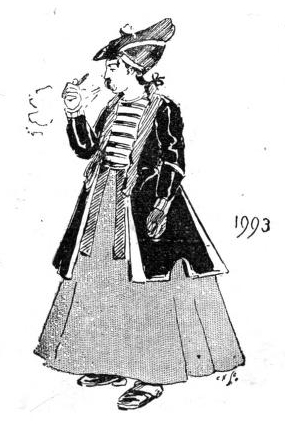
Fashionable Predictions from 1893

As an artist I am always on the lookout for public domain images that I can use in my artwork. As I was looking around for some botanical illustrations, I stumbled upon a delightful site devoted to posting and blogging about these kinds of images. Here’s a series of gems from an article called “The Future Dictates of Fashion,” by W. Cade Gall, and appeared in The Strand in 1893. The author claims to have found a book that is from 1993 and gives a “history of fashion” for the century to come. Time-traveling books?! You can’t get much more Steampunk than that!




Steampunk Book Review: Letters Between Gentlemen

 Sometimes, Steampunk books are serious challenges to the ideals of the Victorian age and tread on the dark side, and other times they are silly fun. Letters Between Gentleman, by award-winning “chap hop” artist Professor Elemental and accomplished author Nimue Brown, is most definitely the latter.
As implied by the title, this book is presented as correspondence between the mad genius, Professor Elemental, and his hapless benefactor. The sister of said benefactor is concerned for her brother’s welfare in light of the string of accidental deaths at the hands (mechanical, animal or some combination of the two) of the Professor’s creations. So she hires a private detective, Algernon Spoon, to look into their association. The book is also populated with the Professor’s “Notes to self” on a range of topics including the best way to preserve beheaded badgers and his on-going battle with the mice he trained to take dictation.
The format left a little to be desired, but on the whole I really enjoyed reading this book. I regularly laughed out loud at throughout at the crazy inventions, cease and desist letters from would-be clients and humorously exaggerated gender norms. Some books carry their readers along on a tide of action, but I kept on reading this one because it was purely entertaining.
Letters came out in September of 2014 and is available now as an ebook or hardcover.
If you aren’t familiar with the Professor’s music videos, check out the animated piece featured on Disney’s Phineas and Ferb below, or watch any of several posted on his website.
Music to Steampunk by: Frenchy and the Punk

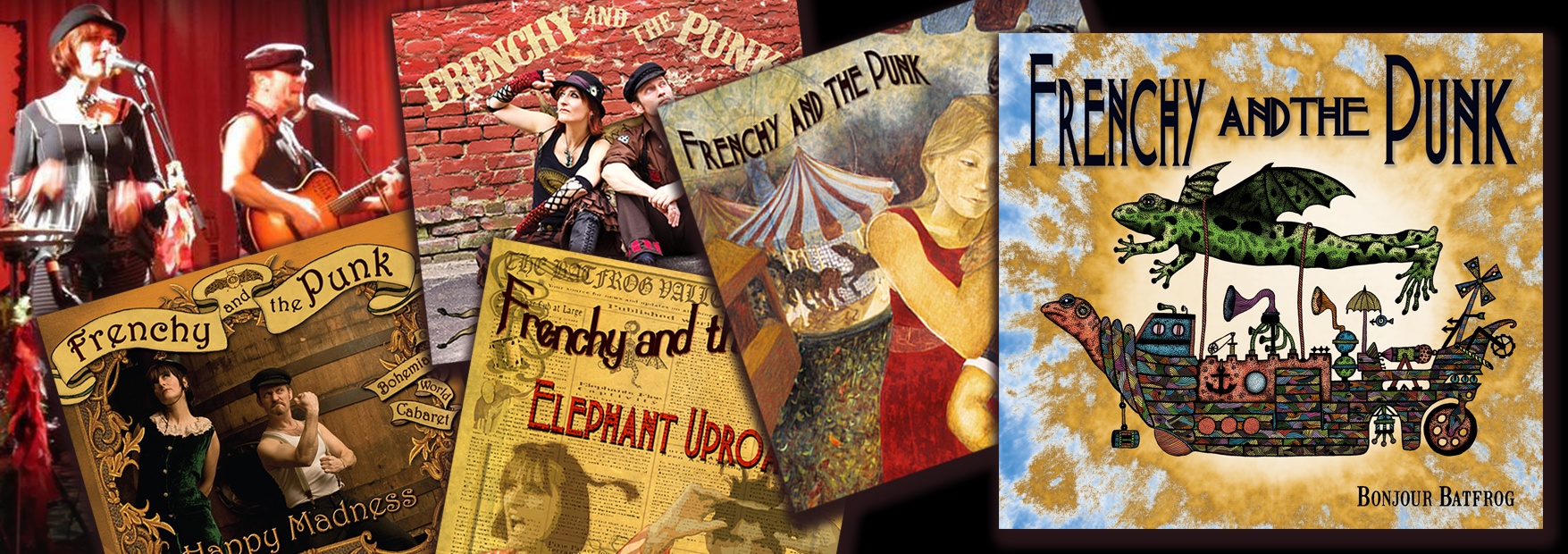
I missed my chance to see the Frenchy and the Punk performance during Weekend at the Asylum, but I’m not going to miss sharing this dynamic duo with you! “Frenchy” (Samantha Stephenson) was on the panel for the Steampunk on the International Scene session at the con, and she shared that though she and “The Punk” (Scott Helland) hadn’t necessarily set out to be a Steampunk band, the way to community had embraced them was amazing and she was so thankful to be doing what she loves for an appreciative audience.
This “Folk Punk Cabaret” band is currently touring in the US, so if you are lucky you might get to see them this Spring.
Upcoming Tour Dates
Jan 16-18 HRM Steampunk Symposium @ Queen Mary, Long Beach, CA
Jan 22 Pond 5, New York, NY
March 6-8 Wild Wild West Steampunk Con, Old Tucson, AZ
Apr 24-26 International Steampunk Symposium, Cincinnati, OH
May 15-17 Steampunk World’s Fair, New Jersey
The Museum of London

This institution has two different locations, but I only got a chance to make it to the one just north of the Millennium Bridge. (the other is at the seafront and focuses on the history of the docklands and shipping industry). The city of London has a very long history, so there is lots to see that doesn’t fit into my Steampunk theme, which can make it ideal for entertaining a group with varied interests. I loved the open format of the exhibits that allows visitors to meander through history, including one of the best displays on the everyday life during the Roman Empire that my Historian hubby has ever seen.

From the Pleasure Garden exhibit at the Museum of London
On the steamy side, there is tons to see. There was an amazing immersive exhibit about pleasure gardens like those that became popular during the 1800s. The darkened space features really cool period clothes, and videos that appear on the walls featuring people wearing them and acting out scenes. The mannequins are also sculptures in their own right and are lit according to what is being shown on the walls. The low light made it difficult to capture with a camera, especially because I didn’t want a flash to ruin the experience for other visitors, but trust me when I tell you it was captivating.
There is also a series of Victorian storefronts that you can walk through that are chockfull of period-appropriate merchandise and props. There is a big-wheel bike out in the open if you want a picture with one.


I also liked the displays of shoes, watches, and other technology that were strewn around in some of the other period sections. The exhibit on the suffrage movement was extremely well done, though I was shocked by a lot of what I saw. I had no idea how violent the pursuit of voting rights became in Britain. All in all, it is a wonderful museum with free admission and worth a whole day’s visit.
Steampunk Sourcebook: Jack the Ripper


On display at the Museum of London
Jack the Ripper is the world’s most famous serial killer, both because of the brutality of the murders and the fact that the crimes are still unsolved. I have seen many Steampunk works make reference to the Whitechapel Murders as a means of situating their stories in time, as well as Jack appearing as a character in movies and books. But with so many interpretations floating around, it can be hard to keep the facts straight, so here is a cheat sheet to help you get it right.
(I went on a Jack the Ripper tour while I was in London for my Steam Tour research and you can read about it here.)The Murders
- In 1888 there were a string of murders in the Whitechapel District of London. Due to the similarities between the victims, modus of the murders, and the proximity of the crimes they were attributed to the same killer. There are five women who are generally accepted as victims of the same serial killer, but there easily could have been more murders that were never discovered, or there could have been more than one murderer.
- Murder #1: Mary Ann Nichols, killed sometime between 2:30 and 3:30 a.m. on August 30, 1888. She was an alcoholic, which led to her separation from her husband in 1882 and her inability to keep any other job than prostitute. Her throat was cut and her abdomen was mutilated.
- Murder #2: Annie “Dark Annie” Chapman, killed at approximately 5:30 a.m. on September 8, 1888. After the death of one of her children by meningitis, she and her husband both became heavy drinkers and separated in 1884. Her husband was required by law to provide for her welfare, but he died in 1886 from alcohol poisoning. She tried to support herself through crocheting and selling flowers, but was also involved in prostitution.
- Murder #3: Elizabeth “Long Liz” Stride, killed sometime between 12:35 and 1:00 a.m. on September 30, 1888. Her throat was cut and her abdomen was mutilated. The postmortem doctor identified the weapon as a thin knife blade, approximately 6-8 inches in length. Like the other victims she and her husband separated, but she was a prostitute before and after her marriage fell apart. She spoke Yiddish and Swedish in addition to English.
- Murder #4: Catherine Eddowes (aka Kate Conway and Kate Kelly), killed a few hours after Elizabeth Stride on September 30, 1888. She left her first common-law husband, Thomas Conway, and her three children in 1880. Later, she took up with John Kelly and they lived together in a lodging house on Flower Street. The night of her death she was arrested for drunkenness and held at the Bishopsgate police station until approximately 1:30 a.m. Within minutes she was killed on her way home. Her face and her abdomen were mutilated, and a piece of her ear as well as her kidney was taken by the killer.
- Murder #5: Mary Jane “Fair Emma” Kelly (aka “Ginger” and “Black Mary”) was killed November 9, 1888. It is believed that the increase in police patrols accounts for the lag between the deaths of Eddowes and Kelly. Her origin is less well-documented than the other victims, but sources say she was the widow of a coal miner with the surname Davies who died in an explosion around 1881. Like the other victims, she was a drinker and reportedly sang Irish songs while enjoying her gin, so it is believed she hailed from Ireland. Unlike the other victims, she was found murdered in her home around 10:45 a.m. and the time of death was set at between 6 and 8 a.m. that morning. Her body was extensively mutilated, the coroner believed the murderer took more than two hours to complete his task.
- During press coverage, the killer was most often referred to as “The Whitechapel Murderer” or “Leather Apron” because of the aprons worn by butchers. The name “Jack” became connected to the murders after letters began to arrive at news outlets and signed by that name.
- The five canonized Ripper killings occurred between August and November of 1888, but police continued to investigate a total of 11 murders that they suspected were linked up until 1891.
The Suspects
- Historians and hobbyists alike have speculated over the identity of The Ripper, and some sources say as many as 500 different people (including at least one woman) have come under suspicion. Many of these people were not suspects during the actual investigation and that is far too many to talk about here to I will only highlight the most well-known and/or plausible.
- According to some, Jack’s identity was already discovered in 2014—or was it? A silk shawl that supposedly belonged to one of the victims underwent DNA testing starting in 2007. In 2014, a book by Russell Edwards detailed the findings of scientist Jari Louhelainen, who claims to have definitive evidence that identifies Aaron Kominski as the notorious murderer. Kominski came under suspicion in 1888 at the age of 23 and died in a mental institution 30 years later. Unfortunately, Louhelainen made at least two major errors in his analysis that were brought to light in October 2014, rendering the conclusions useless. The search continues.
- Others think that the Jack the Ripper conspiracy went all the way to the highest levels of government. Spoiler alert! In the 2001 Johnny Depp flick called “From Hell,” Jack is in fact Prince Edward “Eddy” Victor, aka “grandson” to queen Victoria. According to the theory, Eddy impregnated a low-class girl (and a Catholic no less!) and to avoid the scandal, the queen ordered the matter be “taken care of.” Annie Crook and her royal offspring are spirited away by the royal physician, John Gull, but her friends like Mary Kelly are making too much noise about the disappearance and must be silenced. The serial killer who hates prostitutes is created to cover the real scandal and claims many victims.
- Others actually suspect John Gull himself as the murderer because of the precision of the cuts made to the victims and the fact that Jack was never caught points to some kind of conspiracy in the minds of many enthusiasts.
- One of the more likely suspects is Seweryn Klosowski (aka George Chapman), a Polish-born Jew who had only been in Whitechapel a short time before the murders began. In 1903 he was convicted on three counts of murder and hanged for killing his wives. This would seem to make him a very good suspect indeed, but he killed his known victims with poison, not brutality, and serial murderers rarely change their modus operandi.
- John Pizer was arrested in 1888 for the murders, but was later let go because he had alibis (including talking to a policeman) during two of the five canonical murders. The Sergeant who arrested him, William Thicke, allegedly had personal animosity against Pizer and no evidence whatsoever. Pizer sought reparations from at least one of the news outlets that reported he was the murderer. Thicke was later accused as being The Ripper in a letter sent to The Home Office, but this was likely a hoax and was never followed up on by the authorities.
 Jack the Ripper in Literature
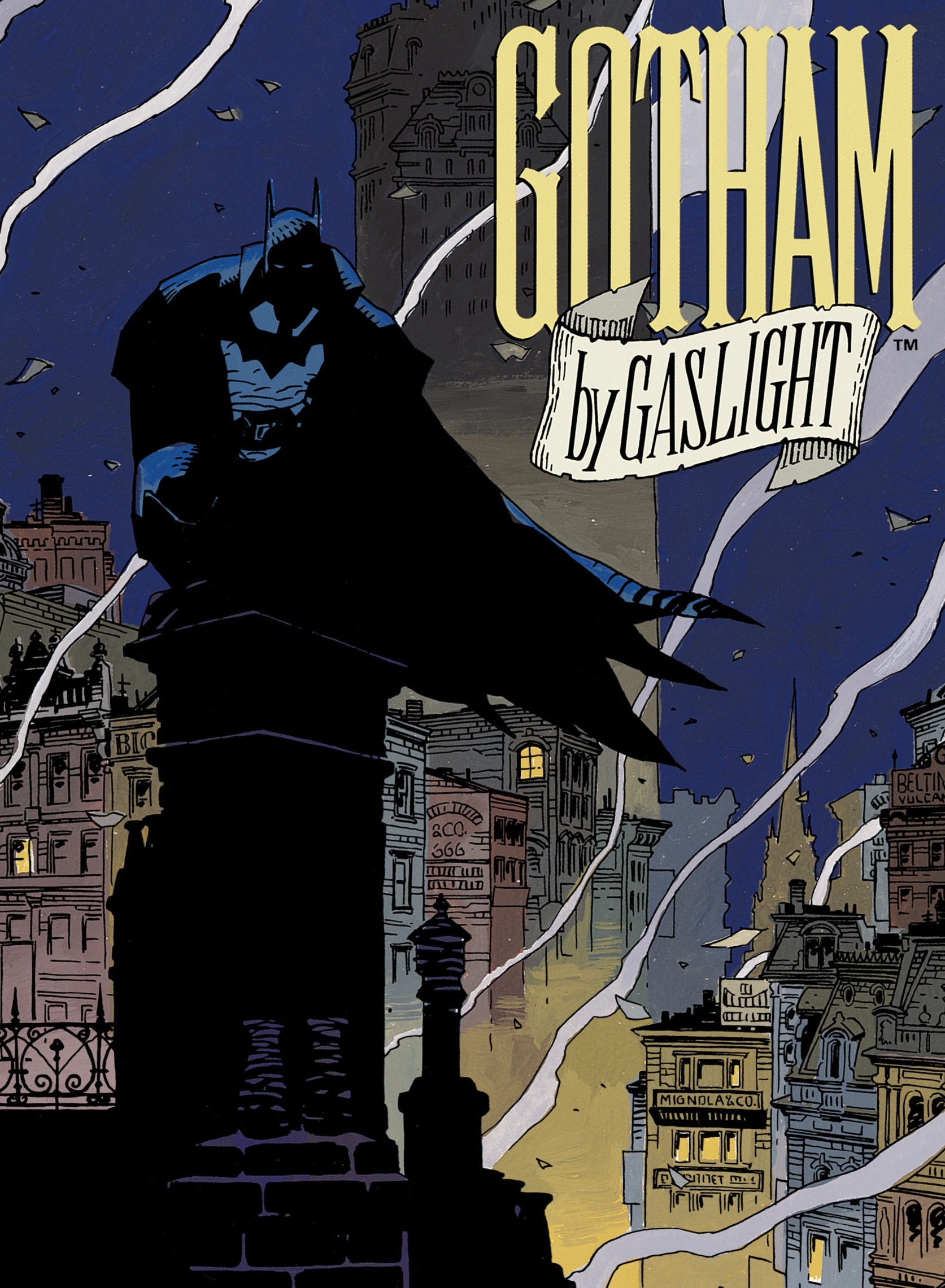
- Gotham by Gaslight (1989) pits Jack against Batman in Gotham City.
- In the Steampunk Chronicles series by Kady Cross, Jack is a character.
- Ripper (2012), by Stefan Petrucha, follows the quest of young man from New York City to find his father in London, but instead finds himself in the middle of a murder investigation.
- Ripper (2012), by Amy Carol Reeves, is about a young woman who is volunteering at a Whitechapel hospital and has visions of the Ripper’s murders before they happen.
 Jack the Ripper in Other Media
- “Ripper Street” is a BBC show about rebuilding Whitechapel in the wake of the Ripper killings. It began in 2012 and the third season is airing as of now (January 2015). (Review coming soon!)
- “Time After Time” (1979) Jack the Ripper uses H. G. Wells time machine to escape his own time and is pursued by Wells to San Francisco, CA.
- “From Hell” (2001) Johnny Depp and Heather Graham star in this film that takes its name from one of the famous Ripper letters that were sent to the press.
- “Progress” is a webseries that operates in an alternative Victorian London where there is already a steam-powered internet. You can watch the first three episodes for free at progresstheseries.com.
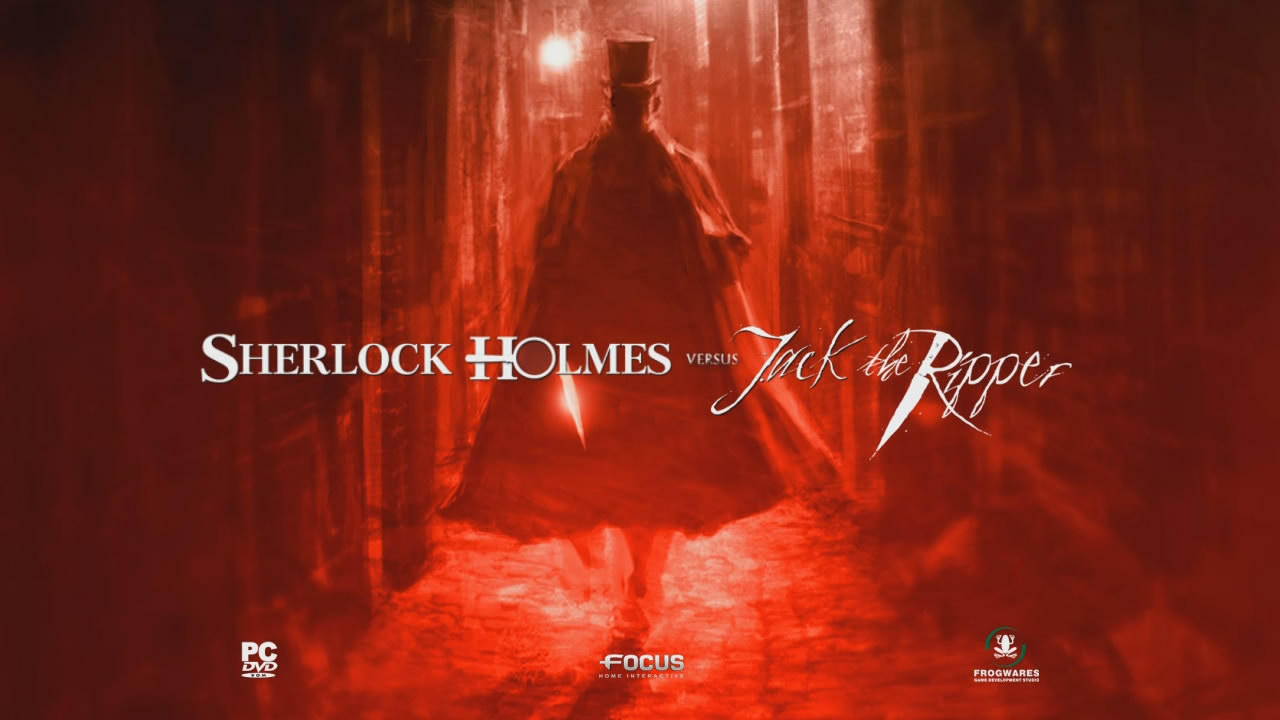
- A game for Xbox 360 and Microsoft Windows entitled “Sherlock Holmes vs. Jack the Ripper” was released in 2009.
Did I miss and Ripper references, books or movies you know? Please leave a comment so I can add to my list!
Steam-powered Internet? Now That’s What I Call “Progress”

I was just putting the finishing touches on my Jack the Ripper Sourcebook for Steam Tour and I ran across an intriguing webseries called “Progress.” This “period cyber-thriller” takes place in an alternative Victorian London. A hacker uses the steam-powered internet to investigate a coded message written by Jack in an attempt to save the lives of his intended victims. It was originally an Indiegogo campaign in 2013, but even though it fell short of its funding they have made the first three episodes of the intended 10-part series in hopes of courting a larger production company.
The trailer is below, and you can watch the chilling episodes (and perhaps make a donation?) at their website.
The Tower Bridge Part 3: The Inner Workings

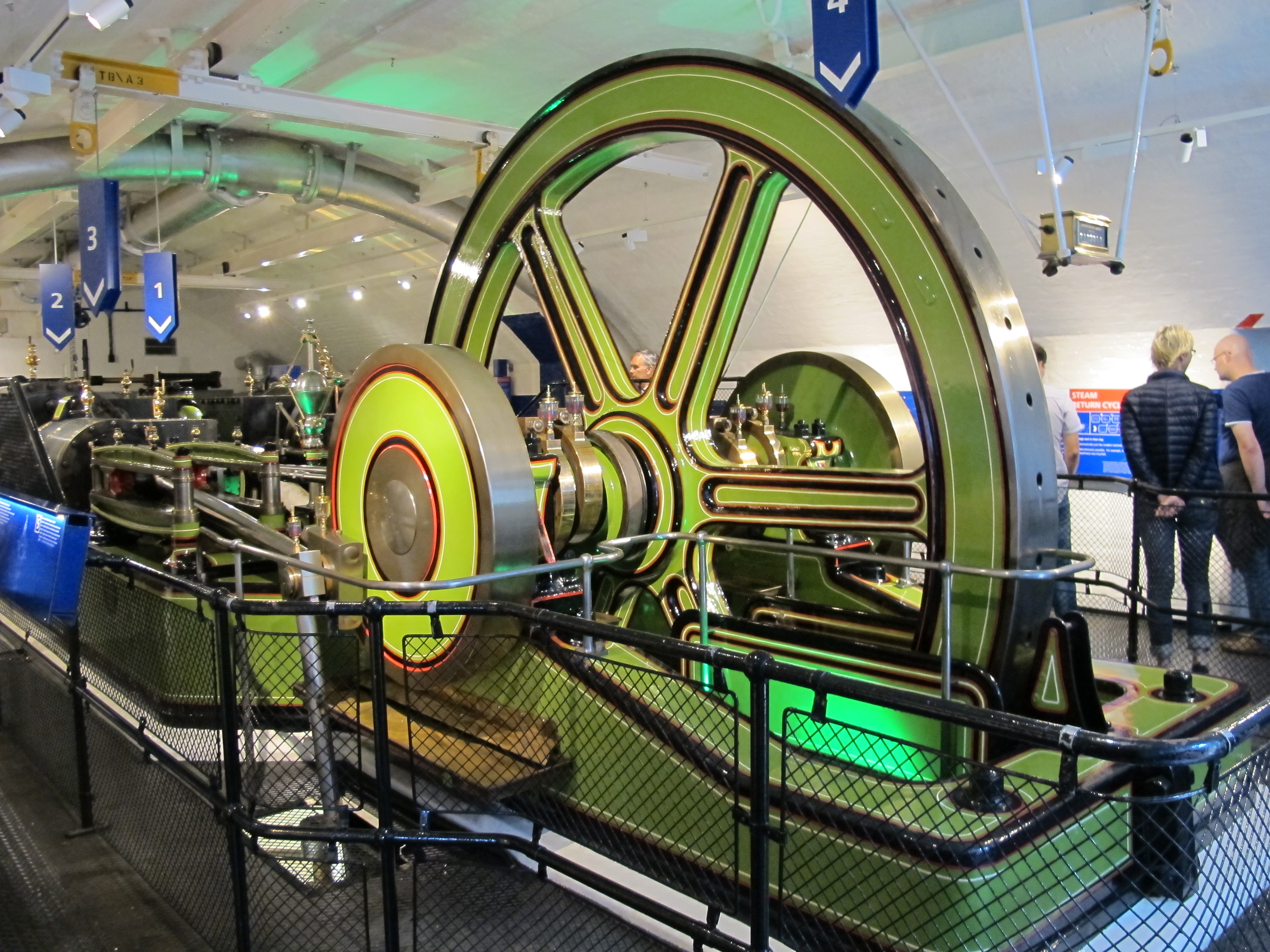 My favorite part by far of visiting the Tower Bridge was venturing into the engine rooms below street level. The green and black coal-powered hydraulic engines reminded me of a giant mechanical grasshopper ready to spring, and made the whole exhibition worth the admission fee. One of the biggest surprises for me during Steam Tour was how colorful some of these old engines are! If you are a fan of engines and haven’t seem my post about the London Museum of Water and Steam don’t forget to take a look.
How it works: “When it was built, Tower Bridge was the largest and most sophisticated bascule bridge ever completed (“bascule” comes from the French for “see-saw”). These bascules were operated by hydraulics, using steam to power the enormous pumping engines. The energy created was stored in six massive accumulators, as soon as power was required to lift the Bridge, it was always readily available. The accumulators fed the driving engines, which drove the bascules up and down. Despite the complexity of the system, the bascules only took about a minute to raise to their maximum angle of 86 degrees.” From the Tower Bridge website.


For more information and pictures from my visit to the Tower Bridge, check out Parts 1 and 2.


 For Whom the Gear Turns