Hay’s Gallery and “The Navigators”

 The Tower Bridge is worth visiting all on its own, but when I spent a day exploring the area I also found some other great things to tickle your Steampunk fancy. I could see on the map that St. Katherine’s Marina was nearby, and on my way I found a hidden treasure tucked away inside a Hay’s Gallery. In it’s heyday in the 19th century, the then-named Hay’s Wharf received 80% of the tea shipments bound for the Pool of London. Today the amazing glass ceiling provides shelter to restaurants, homes and shops in Victorian-era buildings, as well as an amazing sculpture called “The Navigators.”
The combination fountain and sculpture by David Kemp was installed in 1987 and has a decidedly Steampunk feel. The 60-foot homage to the shipping history of the area is made of bronze which has been pleasantly oxidizing. Some parts of the piece have been selectively polished, and the pool has been painted blue which detracts somewhat from the artist’s original intention to combine “Gothic fantasy, sea monsters, man & machine in this Kinetic Sculpture”, but it is still a lovely piece installed in a historic setting that reflects the Steampunk aesthetic from around the time the term was coined. (http://www.davidkemp.uk.com/the-navigatorslondon-bridge/)


The London Museum of Water and Steam

 This is my pick for the best place on my entire Steam Tour to take your littlest Steampunks. There are fun, hands-on exhibits about the water cycle and great info about the history of harnessing the Thames and combatting the Cholera outbreaks through London’s history. But the most exciting parts of the museum complex is room after room of real, working steam engines. They don’t run every engine every day, but I was lucky enough to visit on a bank holiday when they did run every engine for at least 15 minutes at some point during their open hours.


In the courtyard there are some smaller engines as well as a station to make giant bubbles in the afternoon, so that is another plus for kids. There is also a replica of a Victorian-era workshop where all the machines run on the same belt system (the original workshop was destroyed during the Blitz) and they offer tours.


Spiritualism: a Haunting Pastime
Whenever I explain Steampunk to the uninitiated I always find that I have to say, “oh yeah, and also…” at least 4 times to try to encompass everything the genre/aesthetic can cover. I can always get them on board when I go from Jules Verne to punking technology, but then I have to back up and include all of the supernatural creatures that also make regular appearances in Steampunk literature and I often get raised eyebrows in response. But if you know the time period, ghosts, ghouls and other things that go bump in the night fit in directly with the trends of the era.
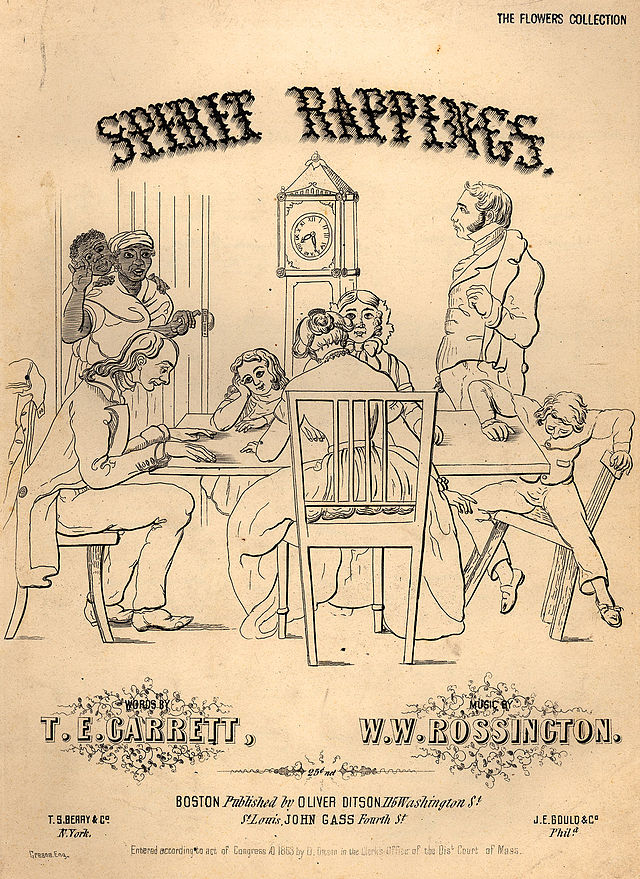 Ghost stories appear in the folklore of countries all over the world, but ghosts as we think of them today in America and the UK where the majority of Steampunk stories occur have their roots in Spiritualism. Some people treated Spiritualism like a religion, and others viewed it more as a science but either way it is based on the belief that spirits are hanging around waiting to have conversations with the living, and they do so by knocking on tables, moving around objects, and occasionally even taking mediums clothes off. They speak through people who claim a supernatural ability or through the use of hypnotized volunteers (and very rarely say “wooooOOOOoooo”). I learned most of what I know about the Spiritualist movement from a wonderful and funny book by my favorite non-fiction writer and former Wired magazine columnist, Mary Roach. She has written several books worth reading, but for the skinny on communicating (or pretending to communicate) with the dead, you must read Spook: Science Tackles the Afterlife.
Many notable historical Brits like Sir Arthur Conan Doyle and Queen Vicky herself were taken in by the “evidence” of spirits among us. But, most folks point to a happening in New York in 1848 where two sisters supposedly contacted a ghost as the beginning. Four years later, mediums started popping up in England and conducting seances. By the late Victorian period many people claimed to have communicated with the dead, and women dominated the medium business. In a time when class division and a clearly patriarchal society predominated, Spiritualism was movement that crossed these boundaries and brought people from all walks of life into its fold. There were even pamphlets, newspapers and public spectacles for the spiritually-inclined during the 1860s.
One popular thing to do during private parlor sessions was to contact famous people, and Charles Dickens (who died in 1870) was one of the most popular spirits to contact. In addition to speaking through the mouths of mediums, ghosts would sometimes also use a typewriter or the like to pen a message from the beyond. Dickens died before he finished his last novel, and in 1873 an American author claimed to have been contacted by his spirit who dictated the ending of the novel. I wonder if this is the origin of the term “ghost writer?”
Ever heard of ectoplasm? Think of the goo left behind by Slimer from the Ghostbusters. Some folks believed that ghosts could leave a trail of the stuff, or that mediums would extrude it as evidence of spirit possession. Ewwwwww.
For more fun facts about this “spirited” movement, check out the articles on Victoria Web.
The Victoria and Albert Museum Part 3: International Exhibitions

The site of the Victoria and Albert Museum was purchased largely through the proceeds from the Great Exhibition of 1851, which was the first international exhibition of its time, though not the last. Many of the wonderful items showcased at these types exhibitions that were held all over Europe during the 19th and 20th centuries eventually found a home at the museum and are still on display today. When walking through the exhibit halls I felt like I was on a scavenger hunt looking for these pieces of history which were seen by millions of people during the course of exhibition and are still breathtakingly beautiful to behold over 160 years later. One of the appeals for me about Steampunk and the era that gave rise to the aesthetic is the emphasis on craftsmanship, and there is no shortage of that at the V&A. Here are two pieces of the most impressive pieces that I encountered during my visit.


This “cathedral in wood” was a gift from the Austrian Emperor, Franz Ferdinand, to Queen Victoria. According to the museum label, it’s decoration reflected the debate about the unification of all German-speaking peoples under one rule. The bookcase had to be at least 20 feet tall, which means it just might hold the entire literary collection of one Steampunk fan 🙂 In the center there is a Belgian altarpiece on display that looked like it had been carved out of the most delicious dark chocolate, but it was also made of wood. These two pieces were not originally shown together, but they both made cameos at the Great Exhibition. The altarpiece reflects the revival of the Gothic style that is often seen in Steampunk works, and makes it a lovely addition to the imposing bookcase.


This symphony in metal is called the Hereford screen, and was on display at the International Exhibition of 1862. Like the altarpiece above, this was a way of harkening back to the Gothic era when churches employed magnificent screens like this one. The choir would stand behind large and ornately carved wooden screens, but this one was intended to showcase new advances in metal-working techniques as much as celebrate the Gothic style. There are several figures on the screen, which is over 10 meters high. The figures could very well have been cast in bronze, but instead were created by using newly-discovered electroplating technology that employed plaster molds and electricity to bend copper to the artist’s will. This is truly an example of old-meets-new in the Victorian era, so it definitely piqued my Steampunk interest.
Have you spotted any pieces of the Great Exhibition or the International Exhibition in London? Please share!
Victoria and Albert Museum Part 2: The Clothes

The primary reason I wanted to visit the Victoria and Albert Museum was because I heard about the amazing displays of fashion through the ages. There is a really great circular gallery with men’s and women’s clothing, and right now there is also an exhibit on wedding dresses, though that has an extra charge where the rest of the museum is free. It would be a great place to do research for costumes, both to get visual inspiration as well as great background info. My best pictures were mostly of dresses, but there are lots of great suits, boots and hats for the menfolk as well.


Victoria and Albert Museum Part 1: Incredible Iron

Some people might think the V&A is not up their alley if they hear the focus is on ‘decorative arts,’ but believe me when I tell you this is not a place where you are going to be inundated with doilies and end tables. Personally, I love the decorative arts because these are the objects that people really did touch, see and experience in their everyday lives, including architectural features. In addition to the fabulous clothing and sumptuous household goods, there is an amazing gallery of just samples of ironwork.
There are still lots of examples of wrought and cast all over London (which will get their own post soon), but these items have often been painted and repainted so many times that the delicacy and detail that can be achieved when working in metal has been totally obliterated. This is not so at the museum, where everything from window grates to railings to candlesticks have been preserved for posterity. If you are a fan of metal, you should definitely make sure you stop by the Victoria and Albert Museum if you are visiting or living in London.
Here is sampling of what I saw when I visited.


Want to Learn About Jack the Ripper? Skip the Tour.


On display at the Museum of London
My original plan had been to sample at least two Ripper Tours while in London, but after running into 6 other tour groups on my maiden voyage, I decided it wasn’t necessary. The groups ranged from 12 members to more like 40, and they all (unsurprisingly) were stopping at the same places. One group was headed up by a vintage bobby, my guide was in waistcoat and hat, and others were dressed in normal street clothes.
I knew there would be at least a couple other groups around but this was nuts, especially considering there was hardly anything to see. That area of London had suffered a great deal during the London Blitz of WWII, so there weren’t really any historic buildings left standing, so the tour meant walking through a long street lined with curry restaurants and maneuvering around construction zones. By about 30 minutes in, the Mister and I were joking that we should have just stopped at the beginning for curry instead.
I was on a tour using what they called “Ripper Vision” and some large historical photographs to try to enhance the experience, but it still fell flat for me. Ripper Vision consisted of a handheld projector that the guide used to show photos of the victims and newspaper stories from the Ripper days, but he couldn’t keep the projector steady so I ended up actually feeling sea sick from all the jerking around and had to look away. The guide was well-versed in Ripper lore, but without any real sites that still looked like they did during the Victorian era, it definitely could have been a lecture in a hall and saved my feet the trouble.
If you want to learn about Jack, I’d say get a book. I’ll be writing a Jack the Ripper Steampunk Sourcebook article for my ezine which will be available around Christmas time, and will not only look at the history and mystery surrounding the murders, but also Jack’s appearances and role in Steampunk so far.
Have you ever read any Steampunk fiction or seen any good movies that featured Jack the Ripper? Do tell!
The Cutty Sark and the English Tea Trade

 It is common knowledge that the Brits love their tea, but it is less common knowledge how this love affair all began. If you are looking for a fun way to explore that history, you should try visiting the good ship Cutty Sark near the waterfront in Greenwich.
The ship itself wasn’t built until 1869, but tea first came to the UK two centuries earlier. Here is a timeline from the Cutty Sark’s exhibits.

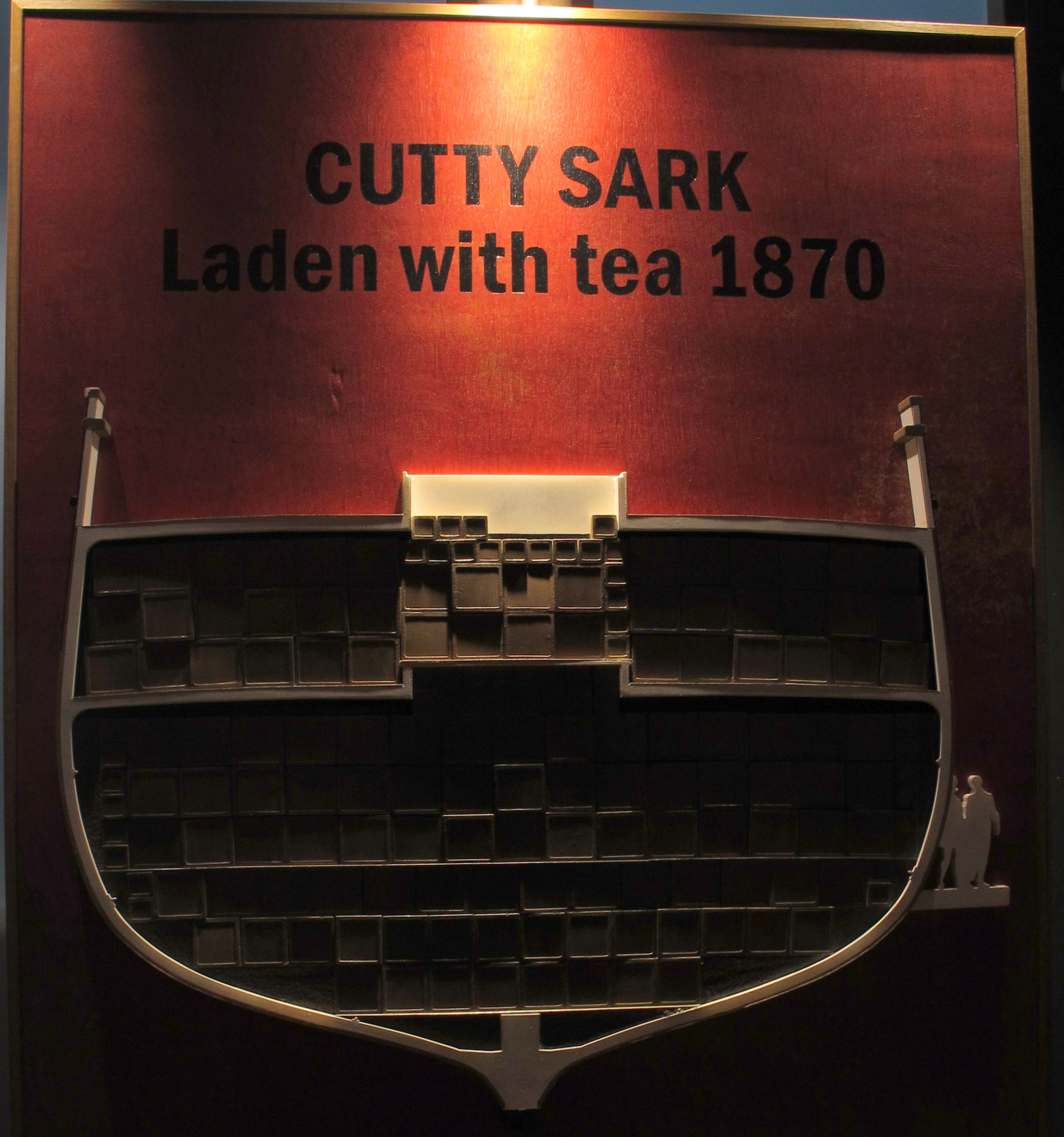 In its heyday, The Cutty Sark was one of the most impressive vessels on the sea, and especially well-suited for transporting tea. The copper hull was not only beautiful, but was especially good at keeping sea water out of the cargo hold. It also had an amazing carrying capacity and was one of the fastest ships on the water.
In fact, it engaged in a historic race in 1872 against another transport called The Thermopylae. Both ships left Shanghai at the same time, and the Cutty Sark took an early lead. Unfortunately, she lost her rudder and had to stop for repairs. The Thermopylae ended up making it to England a full week before The Cutty Sark. This was the only time that both ships left from the same port at the same time, but the Cutty Sark later set a record for reaching Sydney in just 73 days.
I loved visiting the exhibits on the inside, especially the first floor where the interior and the displays were made out of tea crates. There is another gallery the next floor up that has interactive features and videos to help you get into the mindset of a sailor on the ship over its long history. I was also lucky enough to have the perfect weather to explore the deck, which has been restored to its former and shiny glory.


 For Whom the Gear Turns