Steampunk Sourcebook: The Statue of Liberty

The Statue of Liberty, or Liberty Enlightening the World as it is really titled, is among the most iconic landmarks our little blue and green sphere has to offer. My favorite day of my NYC vacation was the one we spent on boats going around the bay and to Liberty Island and Ellis Island. I thought I knew the whole story of this copper colossus, but I learned some great stuff during my visit.
So where did that big green lady come from?
It all started in France. Ostensibly, the statue was a way to mark the friendship between the US and France, and to acknowledge the love of liberty they shared. In reality, it was a resounding raspberry directed at the leadership in France, Napolean the Third. Nap III, as I like to call him, was actually elected to the presidency through a popular vote, but when he was told he could not run for a second term he led a coup and got himself kingafied like his dear old uncle before him. So this huge investment in time and resources was a metaphorical middle finger to Nap III and his total bulldozing of liberty as much or more than a nice gesture to the US. She is facing France directly, her unwavering gaze falling on the very people who, in the eyes of the project directors, were violating liberty the most.
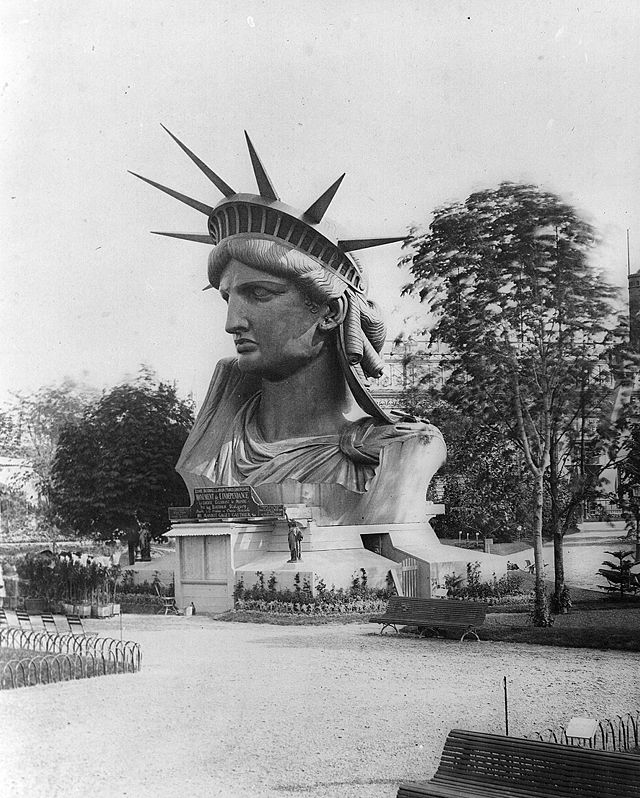 The projected completion date was 1876 to commemorate the 100th anniversary of American independence, but it hit a few hiccups along the way and it was not actually erected until 10 years after the original goal date. As you can imagine, creating a statue that not only measures over 300 feet tall take a lot of engineering imagination, but this statue also had to be able to travel across the ocean and be reassembled on the other side. As an added challenge, the US was in charge of making the pedestal, so the French sculptor Frederic Auguste Bartholdi couldn’t know exactly what to expect when he reached Liberty Island. The torch-bearing forearm of Lady Liberty made an appearance at the 1876 in Philadelpia, and was then displayed in Madison Square Garden until 1882, and the head was a part of the Paris World’s fair in 1878.
 In addition to Bartholdi, whose Bartholdi Fountain can still be seen in the US Botanical Garden, such notables as Joseph Pulitzer and Gustave Eiffel also were involved in the construction. Pulitzer was integral to the fundraising effort to complete the base and got the funds by advertising the chance to get your name in the newspaper for any size contribution to the cause. At that time, newspapers were a fairly new commodity, and hundreds of thousands of people sent in their pennies to see their names in print. Eiffel was brought in to assist Bartholdi with the huge feet of engineering the skeleton for the statue, and he created a structure that not only could support the weight of the copper sheets that made up her skin, but would also allow it to expand and contract with the change in seasonal temperatures as well as sway slightly in the high winds of New York’s harbor.
There are many more statues on Liberty Island than just the lady herself. Phillip Ratner created a series of Rodin-like bronzes commemorating those men and women who contributed the most to the completion of the monument.


When the statue was finally ready for its inauguration only men were allowed to attend the ceremony. Angry ladies commissioned boats and led a protest at sea during the event. This is especially ironic given that the famous poem, The New Colossus, was written by a female poet, Emma Lazarus. It was written and donated as part of the fundraising campaign for the pedestal, and now graces the pedestal itself. But Emma herself was barred from attending.
Here is the poem:
Not like the brazen giant of Greek fame,
With conquering limbs astride from land to land;
Here at our sea-washed, sunset gates shall stand
A mighty woman with a torch, whose flame
Is the imprisoned lightning, and her name
Mother of Exiles. From her beacon-hand
Glows world-wide welcome; her mild eyes command
The air-bridged harbor that twin cities frame.
“Keep, ancient lands, your storied pomp!” cries she
With silent lips. “Give me your tired, your poor,
Your huddled masses yearning to breathe free,
The wretched refuse of your teeming shore.
Send these, the homeless, tempest-tost to me,
I lift my lamp beside the golden door!”
I have run across one reference in Steampunk literature so far to the statue of liberty as seen by dirigible in The Girl in the Clockwork Collar (Steampunk Chronicles 2). Have you run across any in your Steampunk wanderings? Let me know so I can add them to this post.
Enjoy this gallery of the statue as it was being built, as it appears today and with some fun variations by different artists. If I am missing a credit and you know who did a particular piece, please let me know!


Wind and Steam: Transportation and Transitions in New York City

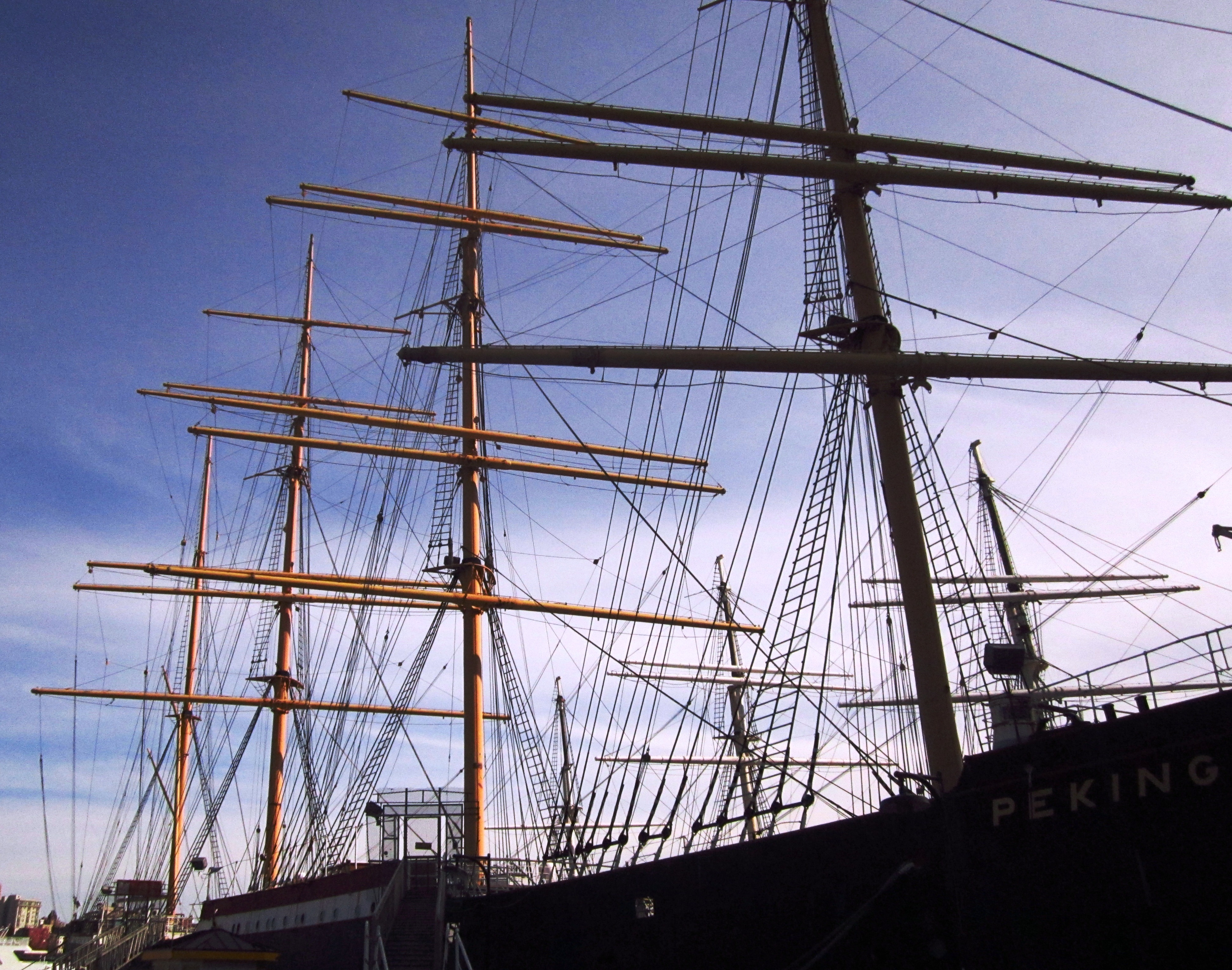
New York City was the beating heart of trade in the United States when the Western world transitioned from the Golden Age of Sailing to the height of steam power. Not long after steamboats started taking passengers (1807) they were scuttling alongside tallships in the New York Bay. There are still a few sailing ships around the bay and the Hudson River today, but they mostly share the waterways with gas-powered yachts and ferries nowadays.


I took a few ferries during my vacation, and anyone who visits the Big Apple should make sure to do the same. It was my favorite part of the whole trip and it afforded some amazing views of the skyline that you can’t get any other way.


There’s no way to think about transitions in the harbor without considering the huge number of people who passed through it in order to begin a new life in the United States. Starting in 1820, the city of New York opened an immigration station at a converted fort. Around 11 million people passed through Castle Garden between 1820-1892, but it closed that year because the first federal immigration checkpoint had just been completed. I am referring of course to the US’s most famous point of entry, Ellis Island. This little island is technically in New Jersey and was doubled in size before the checkpoint was built, mostly by using the dirt displaced by the construction of the New York subway system. The original wooden structures on Ellis Island burned down in a mysterious fire about 5 years after opening, but the beautiful brick structure you still see today was completed around 1900.
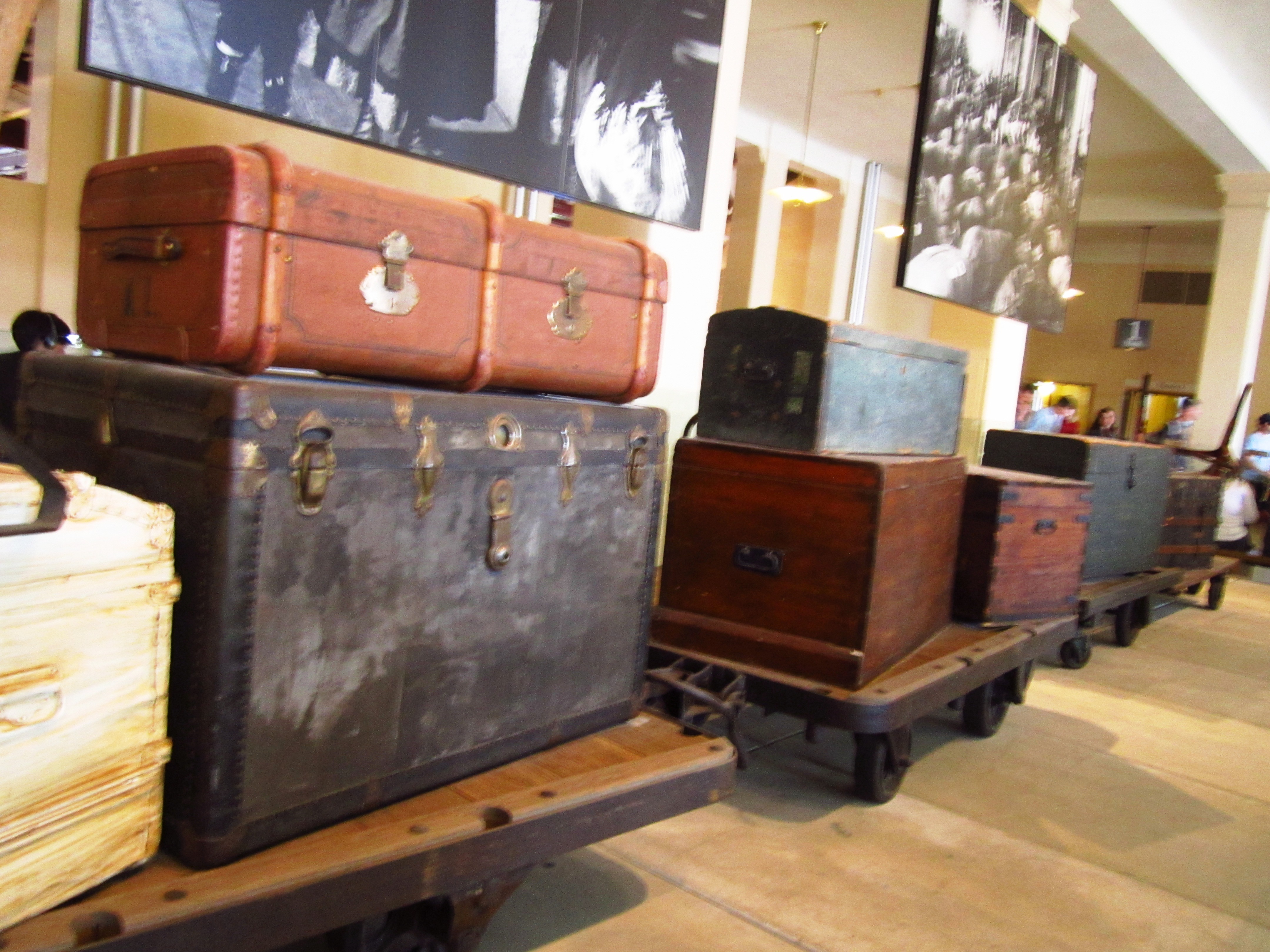
Antique trunks on Ellis Island
I was really looking forward to my visit there and a chance to get some pics of antiques in the recreated tenements, but unfortunately hurricane Sandy ruined the climate control system so most of the museum-type objects had been moved off-site to protect them. As a Museum Studies person I can totally respect the decision, but as a tourist I was really annoyed. The whole first floor contains the Immigration Museum (est 1900), which is cool for adults who are willing to read a lot and look at timelines, but there is not much in terms of interactive or hands-on things for kids (or ADD adults).
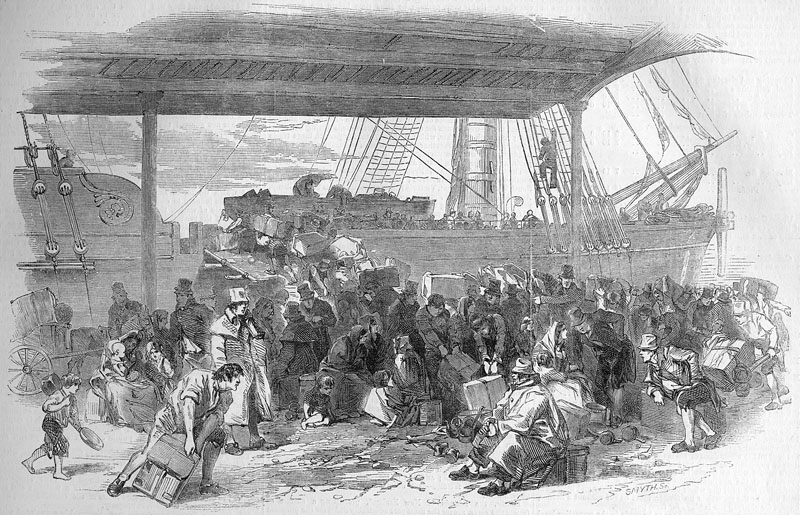
Embarkation at Waterloo Docks, circa 1850
One of the biggest influences on the shipping of humans and goods across the Atlantic was the institution of scheduled trips. I know, that sounds silly, but before the war of 1812, ships tended to leave port whenever they had gotten enough cargo or passengers to make it worth their while. This meant that capricious captains could delay people and goods for weeks at time, which was hardly the cause of consumer confidence. But, post-war some captains starting using a set schedule, which made traveling by sea easier and more reliable than ever before.
When the cargo arrived in New York City, it certainly didn’t stop there. The first reliable steam-powered land locomotive was invented by George Stephenson in 1814. Railways had been used for decades before that, but the carts were always pulled by animals. After his invention of the “Iron Horse”, mass transit by rail became possible on a hitherto unimaginable scale. Even locally the trains made a huge difference, linking the five burrows of Manhattan, Brooklyn, Queens, The Bronx and Staten Island, which facilitated their incorporation into a single city in 1898. And at the center of it all is Grand Central Station.


“Railroads brought people, profits…and pollution. Residents complained. So in 1854 the city banned soot-belching steam engines below 42nd Street, keeping them far from New York’s populated heart. Trains arriving from the north unhitched their engines at 42nd and towed passenger cars the last few miles downtown by horse.
Despite these restrictions, the Hudson, New Haven, and Harlem Railroads were eager to expand. To coordinate their services (and save money) they agreed to share a new transit hub. With 42nd Street the southern limit for steam engines, it was the logical station location.
Grand Central Depot opened in 1871. Three towers represented the three participating railroads. Thirty years later, a new Annex doubled the Depot’s size. But double wasn’t enough. Rail traffic had quadrupled.”
Read more at the online exhibit by the New York Transit Museum called Grand by Design.
But where is the Statue of Liberty in this post?! No worries, she gets one all to herself next time!
My Visit to NYC’s Central Park

You didn’t think I’d visit New York City and all you would get is one picture of the statue of Liberty, did you? Over the next few posts I will share some steam-era highlights from my trip last week. Enjoy!
Central Park
“Central Park, the first major landscaped public space in urban America, was created in the 1850s as an antidote to the turbulent social unrest, largely as the result of the country’s first wave of immigration, and a serious public health crisis, caused by harmful environmental conditions. Frederick Law Olmsted and Calvert Vaux, the winners of the 1858 design competition for Central Park, along with other socially conscious reformers understood that the creation of a great public park would improve public health and contribute greatly to the formation of a civil society. Immediately, the success of Central Park fostered the urban park movement, one of the great hallmarks of democracy of nineteenth century America.” http://www.centralparknyc.org/about/history.html
(Click on any image to open a gallery of larger images)


 For me, the most striking thing about Central Park were the gigantic boulders. I only got to explore about 1/3 of the park, but everywhere you turned there they were, glittering in the sun. This is clearly the part of the island that wasn’t a swamp when the park was built in the 1850s.
And in addition to all of the shiny scenery, the famous Tavern on the Green restaurant (est 1870s) can also be found on the edge of Central Park. The last time I visited NYC I was a kid and we ate there, and the only thing I can remember is that my dessert was a tiny house made of cake that sat at the edge of a raspberry drizzle pool. I was captivated! Unfortunately, we weren’t able to eat there on this trip because of some ill-timed building maintenance, but we made do at a lovely cafe in the heart of the park instead. The Tavern has a gorgeous interior that I was not able to photograph, but you can see a great gallery on their website.
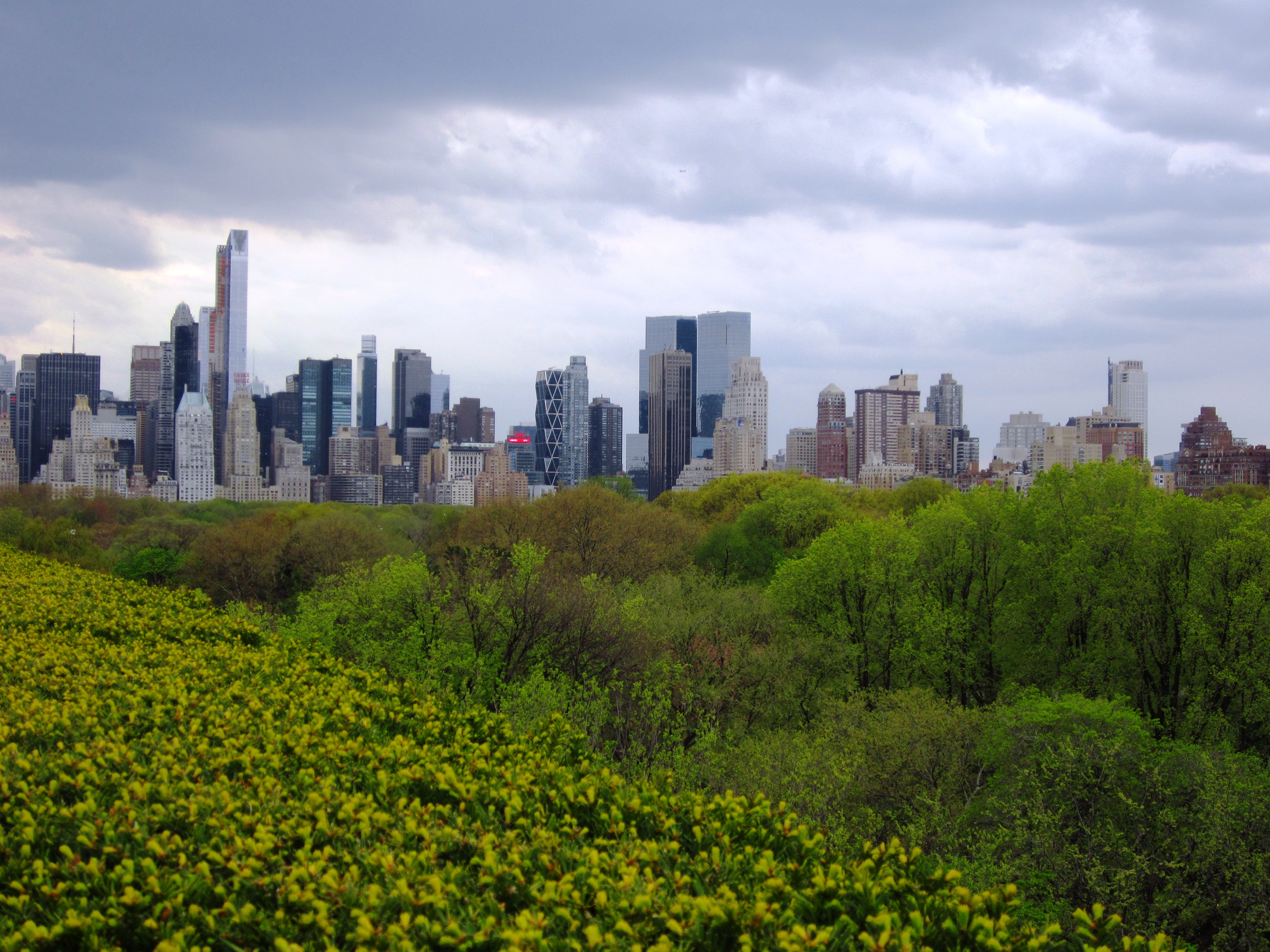
Central Park from the roof of the Met
I realized I was making this gallery that it looks like I went back to the park numerous times because of how much the sky changes between shots, but all of these photos were taken in about a 6-hour period my first full day on the trip. The sky steadily darkened as the day went on and on our way home we got completely soaked trying to flag down a taxi. We had spent the second half of the day at the Metropolitan Museum of Art (opened to the public in 1870), and I had an amazing cocktail on the roof just before the rain started composed of mint and cucumber syrup, muddled basil and gin. I am not usually a gin fan but it was the perfect way to refresh after trekking all through Central Park!
Next up, Grand Central Station…


 For Whom the Gear Turns