The Concept Art for Adventures of Victoria Clarke Will Definitely Get Your Gears Going

My blogger buddy Bia Helvetti just pointed out this amazing movie-in-the-making and I couldn’t wait to share. According to the website for Adventures of Victoria Clarke:
“Stylistically, “Victoria Clarke” borrows heavily from the world of Steampunk, and its sub-culture sometimes referred to as Dieselpunk. Unlike traditional steampunk, which is Victorian-based, we are rooted in the pre-WWII world of Hollywood, and so borrow technology from World War I and Art Deco design influences. However, because Victoria’s family is solidly rooted in Victorian London, fanciful technologies, the designs of Edison and Tesla, and the writings of HG Wells and Jules Verne heavily influence both the design aesthetic and story elements.
The story is based in history, yet features fantastical machines, characters and events that only exist in the alternative reality of our created world. The tone is fun, retro and sexy, and punctuated with periods of intense comic book style action.”


The film was partially funded through a crowdsource website called Indiegogo, but they were short of their goal so proceeding has been slow. The website was last updated in June though and reports progress on the screenplay as well as the amazing images above. The plan is to make not only the movie, but a graphic novel series as well. I really hope to see more progress on this enterprise, it looks amazing and the character of Victoria sounds really interesting. Here is another blurb from the site about how she is more than just a pretty face:


Steampunk Book Review: The Strange Case of Dr. Jekyll and Mr. Hyde
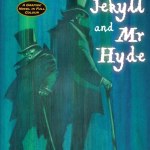
 I have seen several adaptations of R. L. Stevenson’s novella, including an amazing British series called Jekyll that follows one of the not-so-good doctor’s progeny in modern times. One of the amazing parts of the story of this book is how it immediately caught the imaginations of the public and was adapted for the stage within a year of its publication. But I realize recently that I had never actually read the slender tome myself.
Unfortunately, the big reveal that Henry Jekyll (properly pronounced JEE-kill, I recently learned) and Edward Hyde are one and the same is the one part of the tale that is always consistent across all adaptations, so it is impossible for the story to titillate and surprise in the same way it would have been for readers in the 1880s. The idea of a split-personality has long been linked to this piece of literature, and the names of the title characters are part of our vernacular.
BUT, this doesn’t mean the book isn’t worth reading. I really enjoyed Stevenson’s prose, and it is always interesting to return to the source. I surprised to find that in the original that nature of Jekyll’s original “sins” that lead him to want to extricate his two halves from each other are never mentioned, and the details of Hyde’s antics are equally left to the imagination. In order to stretch the story into a full-fledged play or movie the adapters have had to fill in some of these details, which can really alter the tone and nature of Hyde. For instance, in The League of Extraordinary Gentlemen, Hyde reveals to Mina that Jekyll occasionally had ‘impure thoughts’ about boys, and his overwrought Christian guilt made him consider himself a great and terrible sinner when really he was a pretty boring and upright citizen.
In the foreword to the collected works of Stevenson in which I read the mere 60-page novella, Claire Harman recounts a story of Stevenson seeing a theatrical adaptation in 1887. He is all but horrified to see Hyde depicted as “an unbridled womanizer” because, as Stevenson wrote to John Paul Bocock, “The hypocrite [Jekyll] let out the beast in Hyde… who is the essence of cruelty & malice… these are the diabolical in man– not his poor wish to love a woman.”
I found the ambiguity in the story itself very intriguing, and it seems ripe for someone to explore not only the exploits of Hyde during his short life, but Jekyll’s past and his other experiments that are only hinted at in the original. I was also surprised to see that the Hyde of the original story is nothing like the huge monster versions in Van Helsing and League of Extraordinary Gentlemen, but a tiny, young and underdeveloped man who does not have amazing strength, but unbridled passions.


 For Whom the Gear Turns