Steampunk Sourcebook: Hellboy


Hellboy Main Characters
The Hellboy movies are in that category of films that skirt Steampunk without it being the main focus. In both Hellboy (2004) and Hellboy 2: The Golden Army (2008) you can find steamy fodder for your punked out imaginings. Plus, those filed-down horns sure look like goggles!
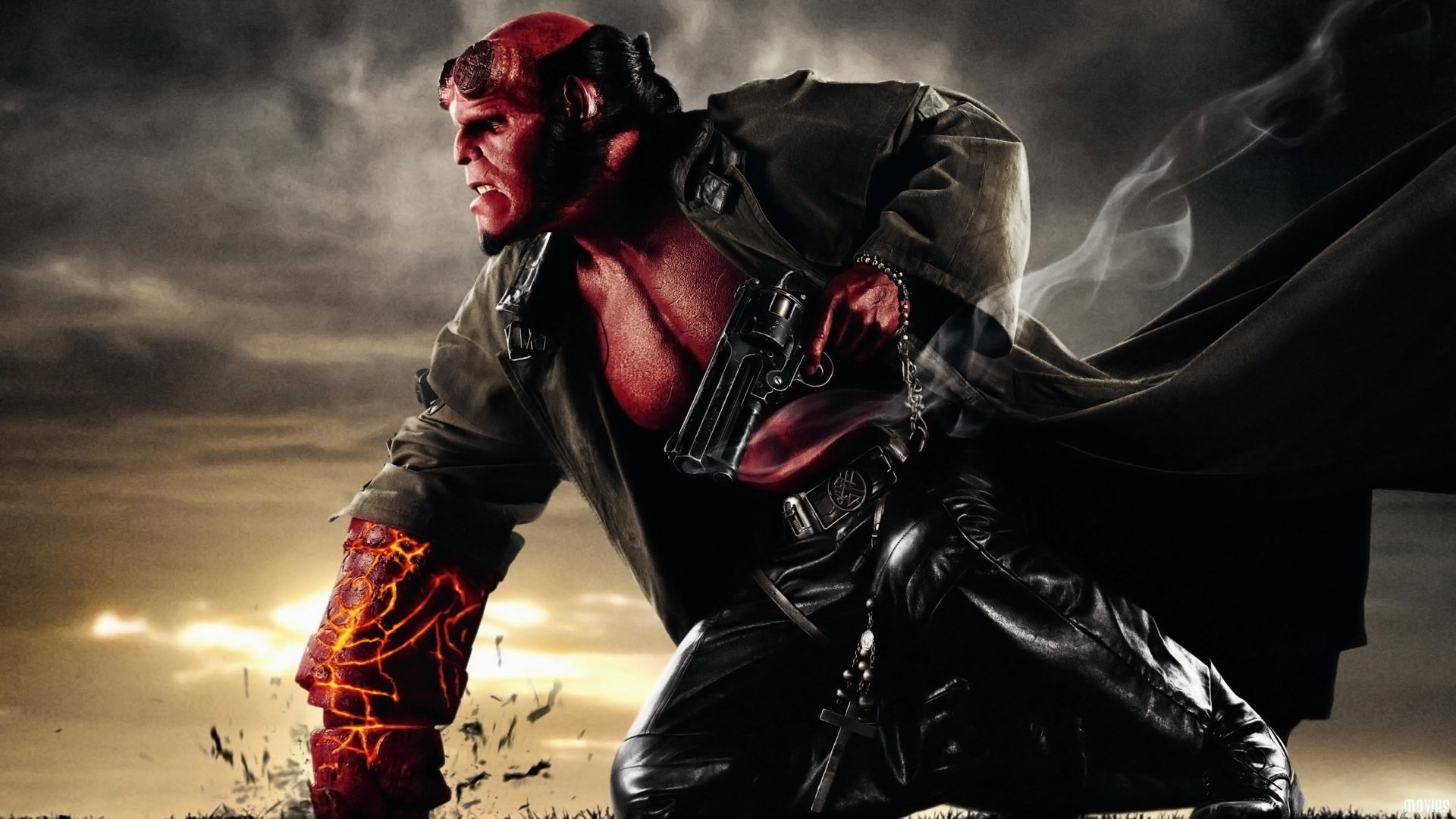
Hellboy in profile
Some fun facts and context
۞ Hellboy first came onto the comic book scene in 1993. Since then there have been dozens of comics and collections, as well as two major motion pictures, two video games and two animated short films called Hellboy: Sword of Storms and Hellboy: Blood and Iron. You can watch both animated films in their entirety under the gallery of photos below.
۞ I also found a bonus “animated comic” in the special features of Hellboy 2 called the “Zinco Epilogue” where (in my opinion) the creepiest villain of all time, Kroenen, is shown being revived by a man called Mr. Zinco and his team of scientists.
۞ The world of Hellboy was created by Mike Mignola, who wrote another awesome Steampunk book, The Amazing Screw-On Head (2002) which tells the tale of an American Civil War-era spy. In 2006, a pilot was aired on scifi.com in a contest to see if it would be made into a show, but it didn’t make the cut. The 22-minute pilot was released on DVD in 2007, but you can watch it by clicking here.
۞ But it was the dark and spooky director Guillermo Del Toro (Pan’s Labyrinth, Pacific Rim) who brought these characters to life on the silver screen. With the assist by Peter Briggs of Alien vs. Predator fame, Del Toro wrote both feature length movies and was a creative producer on the animated films. You can see a kindred spirit to the style of Pan’s Labyrinth in the visage of death in Hellboy 2.

Death
۞ “Hellboy” is the name that was given to the little red demon discovered by Alliance soldiers when he was “born” in the wake of WWII in 1944. It is revealed during Hellboy (2004) that his “true” name is Anung un Rama which loosely means “and upon his brow is set a crown of flame.” During the movie, a many-times-resurrected Rasputin (Karl Roden) forces Hellboy to accept his role in the rise of the Ogdru Jahad, a phylum of Cthulu-like monsters that would make H.P. Lovecraft proud. One of Hellboy’s special features is a giant arm made of stone, which can act as the key to open the Ogdru Jahad’s crystal prison in another realm. Luckily for humanity, Hellboy stops (most of) the creatures from entering our world and thwarts Rasputin’s nefarious plot.

“Family Photo”
۞ This supernatural detective love cats and enjoys big guns and fine cigars. He was raised like an ordinary boy by Professor “Broom” Bruttenholm, a founding member of the Bureau for Paranormal Research and Defense (BPRD). Hellboy’s aging process is described as “reverse dog years,” so Broom knows that Hellboy will outlive him and worries about his future. Prof. Broom is played by John Hurt, who also lends his voice to the animated films. It took me awhile to realize that I was I was looking at the actor who played Mr. Ollivander from the Harry Potter films, as well as the villain from another wonderful comic-turned-movie, V for Vendetta.

John Hurt as Professor Broom
۞ Hellboy is joined in both movies by his buddy and fellow freak, Abraham Sapiens. Abe is a fish-person a la the creature from the Black Lagoon, and was actually portrayed by multiple actors. Doug Jones is the one who had to crawl into the prolific prosthetics, but the voice of Abe in the first movie was actually done by actor David Hyde Pierce who goes uncredited.
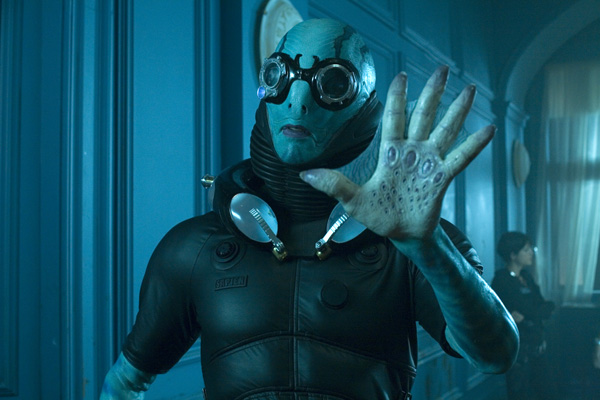
Doug Jones as Abe Sapien
۞ Hellboy’s lady love is Liz Sherman, a reluctant pyrokinetic agent for the BPRD. In the movies and animated shorts she is played by Selma Blair. Belief in psychic abilities and clairvoyance (ie, communicating with spirits from the “other side”) reached their pinnacle of popularity during the Victorian era. If you are looking for an absolutely amazing non-fiction book about what happens after we die, check out Mary Roach’s hilarious and poignant Spook: Science Tackles the Afterlife. You can read a description here.
So where is the Steampunk in all of this?

Karl Ruprecht Kroenen without his mask
In the first movie, Hellboy has an enemy named Karl Ruprecht Kroenen. In the comics he is just another Nazi in a gas mask, but Del Toro creates a truly creepy new backstory about a man obsessed with surgeries. His fetish has left him without things most of us take for granted, like eye lids, lips, etc. (you know, the little things.) In return, his research has also given him preternaturally long life do to a body filled with saw dust and clockwork. I have a feeling it is this guy’s cringe-worthy visage that boosts the movie from a PG to a PG-13. [Shudders]
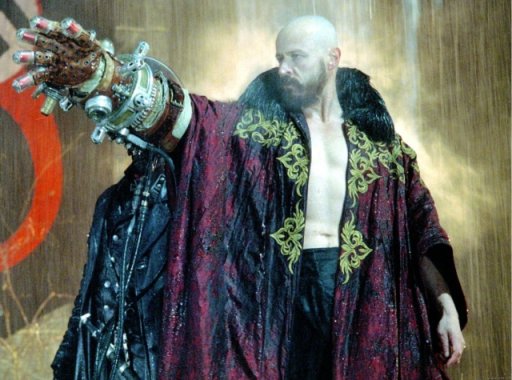
Rasputin
But it is a Victorian-era villain who directs the action. Grigori Rasputin (played by Karl Roden) was born in 1869, and was living high on the proverbial hog off the Russian nobility during the early 1900s as a royal physician. According to the movie, he has been resurrected in 1944 and is there at the beginning of Hellboy’s life. His terrible plot continues to unravel 60 years later (give or take a resurrection and some minions) he attempts to use Hellboy to bring the world to its knees.

Golden Army Soldier
If we move on to the enemies and allies of Hellby 2: The Golden Army, we need not look any further than the title. The Golden Army was built by a goblin blacksmith to end the war between humans and supernatural beings like trolls, fairies and elves. The King of the elfs, Balor, tries to make it so the army can never be awakened, but thousands of years later and in the hills of Ireland the clockwork army lays dormant. Don’t be fooled by their egg-like appearance, these “seventy times seventy soldiers” pack a wallop as big as Hellboy and they put themselves back together seemingly without end.
There is a gorgeous animated prologue to the movie that tells the whole story and you can watch it below.

Johann Krauss
Luckily for Hellboy, he does have some Steampunk fighting on his side, too. Johann Krauss is an agent for the BPRD, but he and Hellboy do not cross paths in the comics. According to the books, Krauss suffered an accident in 2002, but in the second installment of Del Toro’s Hellboy movies his suit definitely looks like it is from the turn of the 20th century. He no longer has a body, so the suit contains his ectoplasm, another popular trope in the Spiritualist movements of the early 1900s.
Check out more videos and photos from the movies below, as well as steamy homages to Hellboy and his buddies I found online.


This is the prologue from the second Hellboy movie. It tells the origin of the Golden Army and it has tons of machinery and gears.
Jameson “Iron Horse” Commercial
In case you needed another reason to like whiskey…
Steampunk Short: The Amazing Screw-On Head pilot (2006)
The Amazing Screw-On Head was originally a comic book by artist Mike Mignola, who also brought us the Hellboy series and Atlantis: The Lost Empire. In 2006, the SyFy Channel (the then SciFi Channel) aired several pilots on their website for possible shows. Unfortunately, Mignola’s creation did not make the cut, but you can watch 22-minute pilot below.
“As I’ve always said; All intelligent people should be cremated for the sake of public safety.”
~Screw-On Head
Did those voices sound familiar? That’s because you just heard the voice talents of Patton Oswalt (Mr. Groin), David Hyde Pierce (Emperor Zombie) and Paul Giamatti (Screw-On Head).
I thought this was a fun little show with some good body part puns and a strong Steampunk premise (a super secret agent who can use a variety of mechanical bodies). It’s too bad it didn’t get made into a series, I bet the writers and actors had a lot more to offer.
Steampunk “Under the Gunn”
I was only 8 years old when reality TV got its kickstart in the form of MTV’s The Real World in 1992. Since then the genre has given us a variety of ways to put people in a cage and observe their movements, whether they be conniving their way to love or rising above the competition to claim fabulous prizes. I will admit that I followed the love lives of plastic people like Bret Michaels and Tila Tequila with the rest of the sheep (I comforted myself by imagining I was doing an exercise in Anthropology), but for me the reality shows that have always been the best and continue to surprise me are the fashion competitions.
I’ve already shown you what Steampunk treasures guilty pleasure America’s Next Top Model had to offer, and last night Project Runway: Under the Gunn stepped up to the plate with the prompt to create “avant garde looks in the Steampunk aesthetic.” The designers were given $300 to spend on fabric and 30 minutes to dig through gadgets, clocks and other hardware to give their looks some mechanical flair. While a couple designers did struggle with the concept, I was really impressed overall with the extent of their knowledge and clever interpretations.
Click on any photo to open a larger slideshow.


During the show, Lifetime.com invited viewers to “play along” by voting on different questions throughout the episode. The first poll asked if viewers liked Steampunk, and I was delighted to see 76% of people said that they did. Lifetime has the whole episode available here, as well as a great set of photos of each garment with zoom capabilities here.
More photos from Episode 7.


Did you know that Steampunk has found its way onto Project Runway before? Here is a collection from

Michelle Lesniak Franklin, Seaon 11 winner

Michelle Lesniak Franklin, Seaon 11 winner, in the workshop with Tim Gunn
Mechanical Menagerie: Here Kitty, Kitty!


Steampunk Engineer
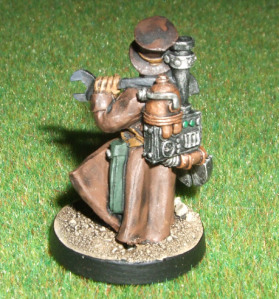
I found this awesome figure (garden gnome?) from “a loft full of lead.”

This Lead Adventures Engineer is a nice steampunk figure, armed with a massive spanner and equipped with a steam powered mechanical arm.

The boiler on his back has some detailed gauges and dials, not that he can read them very easily…
Steamboy (2004) is an Epic Steampunk Adventure out of Japan


When I first ran across a description for a manga Steampunk movie I admit that I was skeptical. But, I am so glad that I got it through Netflix and gave it a shot because it was incredible!
 The director, Katsuhiro Otomo, is best known for his cyberpunk directorial debut Akira in 1988. I have a great respect for graphic artists and animators, and the creators of this film lend all of the attention to detail and breath-taking beauty to the Victorian era as you could hope for. The settings are primarily the Crystal Palace of the Great Exhibition in London and inside an enormous “steam castle” and they have been rendered with incredible detail.
Otomo takes a few liberties with those pesky historical facts, but you can’t go letting the facts get in the way of a good story 🙂 For instance, Steamboy takes place in 1866, but the Great Exhibition took place in 1851. Likewise you get to see the Tower Bridge totally destroyed, but it was not built until 1894. I recommend you just chalk it up to being an alternative Victorian era and enjoy the ride.
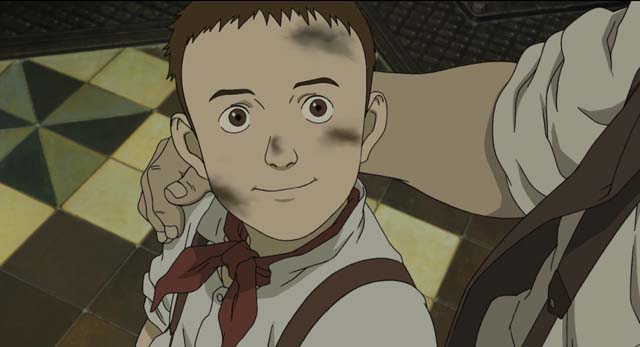 The story centers around a young boy named Ray Steam. He comes from family of talented inventors and has inherited their knack for tinkering. His father, Edward Steam and Grandfather, Lloyd Steam, have been gone for some time working on their inventions, but Ray’s world is turned upside down when his Grandfather sends him a mysterious package with instructions to protect the contents at all costs. Soon after it arrives, representatives of O’Hara Foundation (the wealthy and powerful company that sponsors his family’s work) appear and try to steal it from him. Grandpa Steam gets to Ray in time to tell him of his father’s death and to help him escape the clutches of the O’Hara cronies.

Monowheel from Steamboy
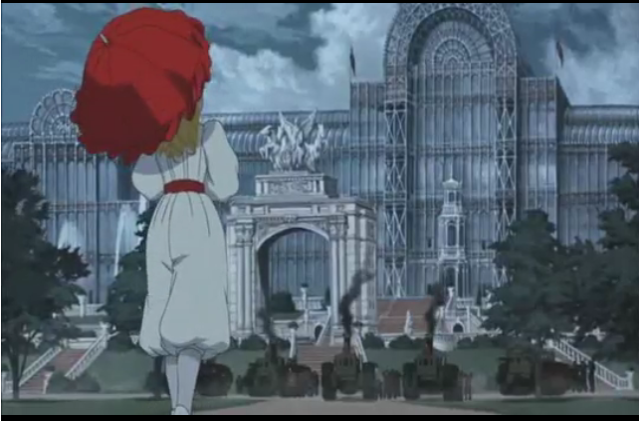 The letter from Grandpa Steam tells Ray to get the steam ball to another inventor, Robert Stephenson. By happy coincidence, Stephenson was on his way to see Ray’s grandfather so he was on the train Ray uses to escape the agents of the O’Hara Foundation. Or, at least that is what they think. But, as the train pulls into the station in London a zeppelin descends and the henchmen use a huge metal arm to capture Ray and take the steam ball to their headquarters at the Crystal Palace. When Ray arrives he finds out that his grandfather lied and his father is still alive and the steam ball is an integral part of a colossal steam-powered castle that is hidden within the walls of the Palace itself.
For a while, Ray works side by side with his father and meets Scarlett, the incredibly spoiled granddaughter of the O’Hara Foundation’s found. Unbeknownst to Ray, his grandfather is being held prisoner inside the steam castle, but he manages to escape. Ray finds him attempting to sabotage the steam castle because he knows its true and nefarious purpose. Ray has to decide where his loyalties lie and whether he is will to be just another cog in his father’s machine.


In case you couldn’t tell, I loved this movie. And don’t give me any of that “I don’t DO anime” or “cartoons are for kids,” because this film can totally stand up against any Hollywood blockbuster simply because it is animated. Illustrators and animators have the freedom to make anything they can imagine actually appear, and the massive scale of this movie would hardly be possible any other way. And never fear, just because it is a Japanese movie doesn’t mean you are doomed to subtitles. Just make sure to change the language setting on the DVD and you can watch the whole thing dubbed in English.
A Few Thoughts About Steampunk and War
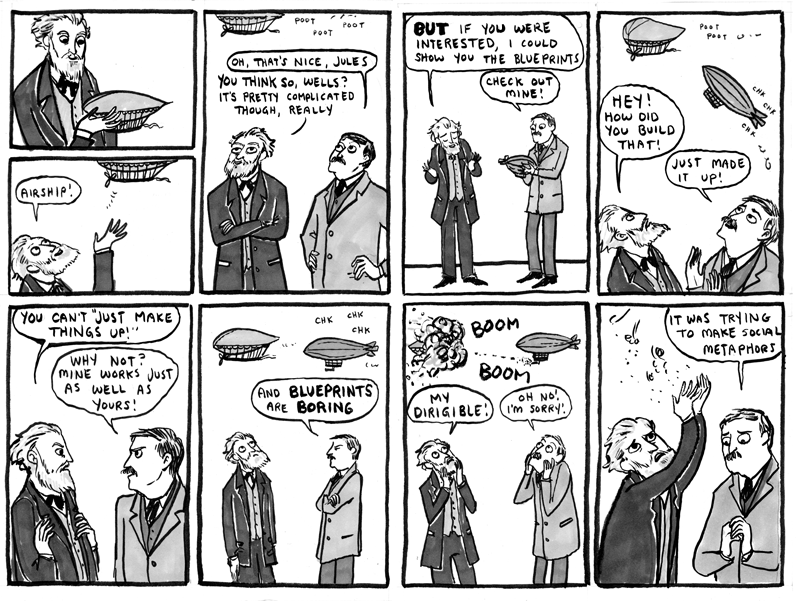
By Marcel Mercado
I have read a few different articles by people who believe that Steampunk as a genre is driven by violence. For instance, Harry Markov insists in his article for the multicultural Steampunk blog Beyond Victoriana that Steampunk is completely driven by war. The American Civil War and the impending first world war are certainly used as backdrops for Steampunk literature, and there are plenty of stories about fictitious places and made up wars, but I think saying that war is at the heart of the entire genre is broad overstatement.
Perhaps people have gained this misconception because gadgets, vehicles and creative technology are definitely key to Steampunk and war offers a great opportunity for mad scientists to flex their skills. The American Civil War and the over-hanging cloud of World War I are popular backdrops for Steampunk stories, as well as other conflicts like the Second French Revolution (Dark Portals: Chronicles of Vidoqc). And it is definitely true that many of the greatest technological advances in human history have been the result of weapons research. But, our quest to travel in space also drove an era of inventions that we still use widely today (click here for some examples). War may act as a catalyst for technology, but so does curiosity, and there is no reason to think that inventors are stymied without it.
And as central as old/new-fangled technology is to Steampunk, it is not the end of the story, not by a long shot. Steampunk is a means of exploring so many other concepts than war-driven tech that it is a discredit to distill an entire genre to one thing just because it is the most obvious. I would say that challenging gender roles and Victorian society is just as central if not more so than the technological aspect. Women who transcend their corsets and the men who come to appreciate them as equals pop up all over the genre.
And of course, references to and re-imaginings of classic science fiction and 20th century historical figures is where it all began. I would argue that if you had to choose only one thing about Steampunk to highlight this is the most unique and quintessential piece to the puzzle.
What do you think? Have you found war to be more central to Steampunk than I am giving it credit for? Or do you agree that violence does not need to be the key ingredient in a Steampunk story?


 For Whom the Gear Turns